
 Supplement Material
 Jujube Camp
 Finished Product
 Fermented Drinks
 FSMP
FSMP Sports Nutrition Supplements
 PKU Health Care Activities
 CKD Health Care Activities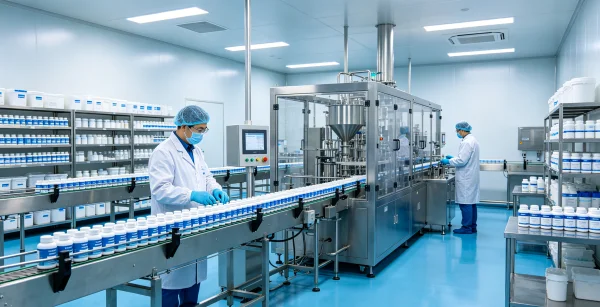



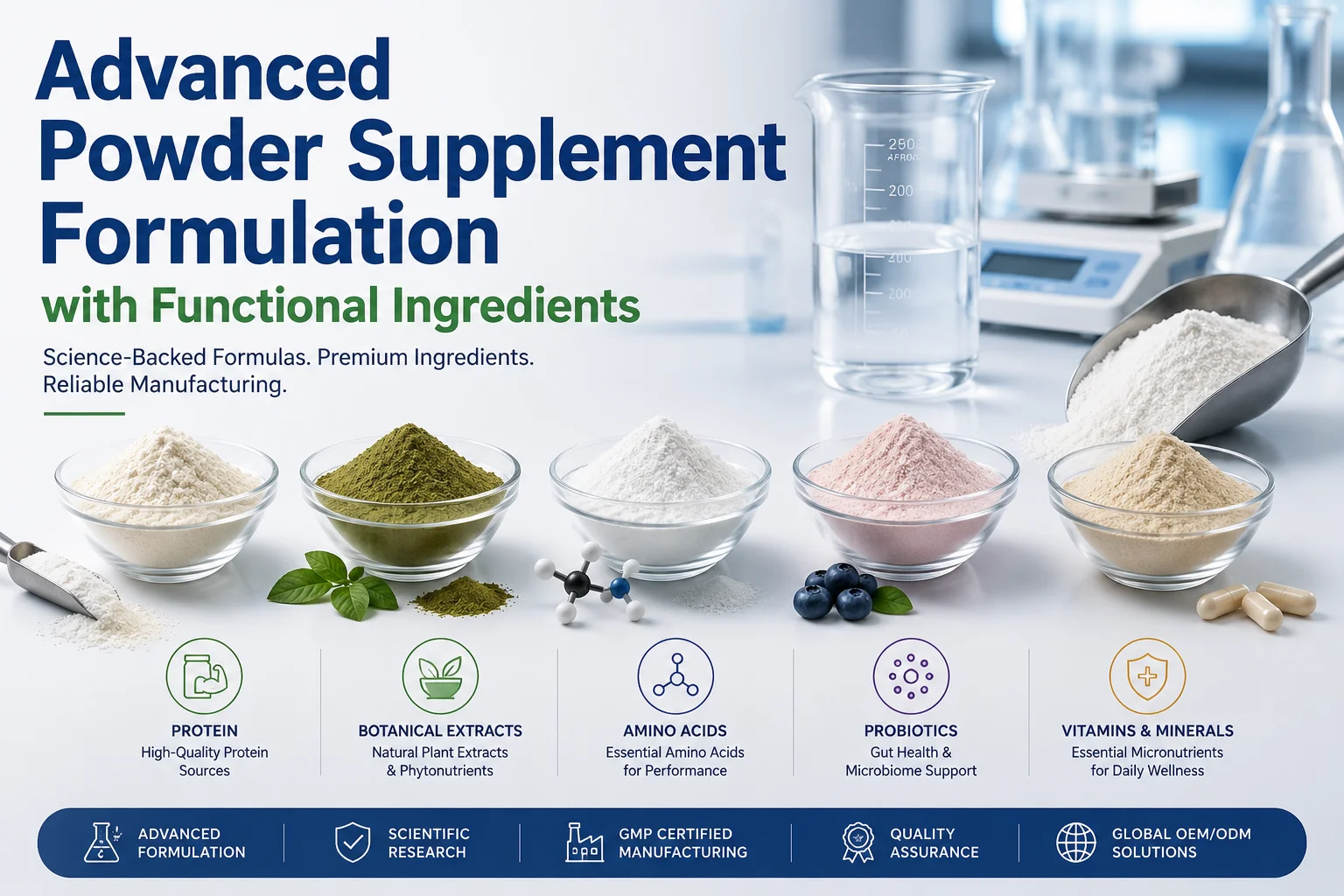
How to Start Your Own Supplement Brand: A Step‑by‑Step Guide with Real Industry Insights
How Much Does It Really Cost to Start a Supplement Brand?
One of the biggest misconceptions among first-time founders is that launching a supplement brand only requires paying for the product itself.
In reality, manufacturing is only one part of the overall investment. Depending on your product type, packaging format, target market, and launch strategy, startup costs can vary significantly.
A typical supplement project may include the following costs:
| Item | Typical Range (USD) |
|---|---|
| Formula Development | 500–5,000 |
| Product Samples | 100–1,000 |
| Packaging Design | 300–3,000 |
| Regulatory Review & Testing | 500–5,000 |
| Initial Production Order | 3,000–30,000+ |
| Freight & Customs | Varies by destination |
| Website & Marketing | 1,000–10,000+ |
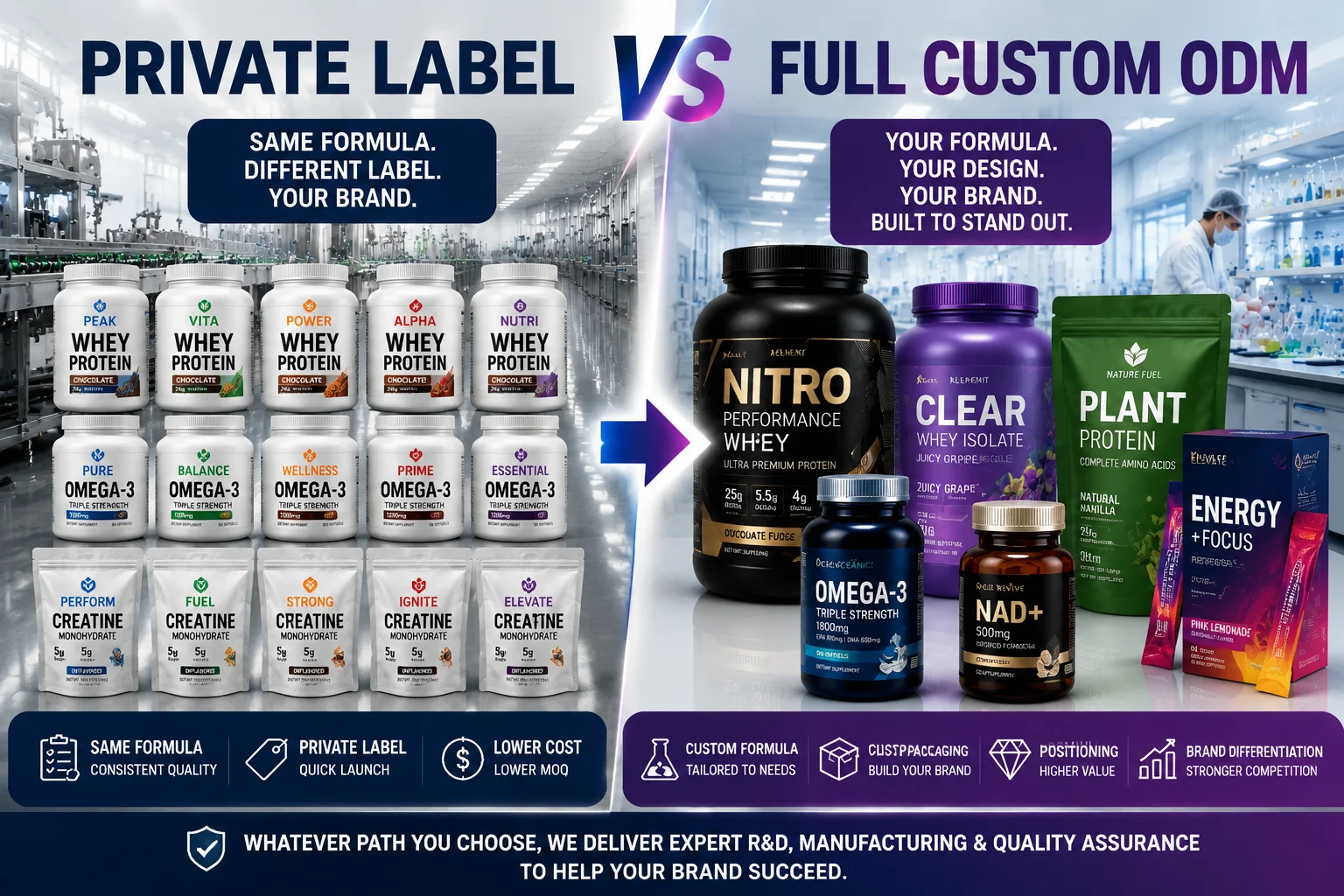
For example, a simple private-label whey protein powder may require significantly less investment than a custom-formulated nootropic supplement containing patented ingredients.
In our experience, many successful startups begin with a focused product strategy rather than launching multiple SKUs simultaneously. Starting with one strong product allows founders to validate market demand, optimize cash flow, and reduce inventory risk.
Hidden Costs New Brands Often Overlook
Beyond manufacturing, new supplement companies frequently underestimate:
- Packaging tooling and artwork revisions
- Product testing and stability studies
- Freight fluctuations
- Import duties and customs clearance
- Inventory storage
- Marketing and customer acquisition costs
Understanding these expenses early can help avoid unexpected cash flow challenges during launch.
What Is the Typical MOQ for Supplement Manufacturing?
MOQ (Minimum Order Quantity) is one of the first topics discussed between a brand owner and a manufacturer.
Many entrepreneurs search for the lowest possible MOQ, but the reality is more complex. MOQ is largely determined by raw material purchasing requirements, packaging minimums, production efficiency, and quality control procedures.
Typical industry ranges include:
| Product Format | Typical MOQ |
| Powder Tubs | 500–2,000 Units |
| Capsules | 1,000–5,000 Bottles |
| Tablets | 1,000–5,000 Bottles |
| Stick Packs | 5,000–20,000 Sachets |
Why Extremely Low MOQs Are Not Always Better
While low MOQs reduce initial investment, they can significantly increase the cost per unit because:
- Production setup costs are spread across fewer units.
- Packaging materials often have supplier minimums.
- Quality control costs remain largely fixed.
- Manual filling and labeling may be required instead of automated production.
For many growing brands, selecting a slightly higher MOQ can actually improve profitability by reducing manufacturing costs per unit.
Questions to Ask About MOQ
When discussing MOQ with a manufacturer, consider asking:
- Does the MOQ vary by packaging type?
- Is the MOQ based on finished units or raw material requirements?
- Are mixed flavors or SKUs allowed within one production run?
- Will increasing the order quantity significantly reduce unit cost?
These details can have a major impact on your overall business model.
How Long Does It Take to Launch a Supplement Product?
Many first-time founders assume that supplement manufacturing begins immediately after placing an order.
In reality, a successful launch requires several stages before production can start.
A typical project timeline may look like this:
| Stage | Estimated Time |
| Formula Selection & Quotation | 1–2 Weeks |
| Sample Development | 1–3 Weeks |
| Formula Approval | 1 Week |
| Packaging Design | 2–4 Weeks |
| Packaging Production | 2–5 Weeks |
| Manufacturing & Quality Control | 2–6 Weeks |
| International Shipping | 1–8 Weeks |
For most projects, the total timeline from concept to delivery is approximately 8–16 weeks.
Factors That May Extend Lead Times
Several factors can delay a project:
- Custom formulations requiring ingredient sourcing
- Imported or patented ingredients
- Delayed artwork approval
- Regulatory reviews
- Peak production seasons
- International shipping disruptions
The most efficient projects are usually those where formulation, packaging design, and regulatory review are planned simultaneously rather than sequentially.
How to Choose a Reliable Supplement Manufacturer
Choosing a manufacturing partner is often more important than choosing the product itself.
A reliable manufacturer can help prevent costly mistakes related to formulation, compliance, packaging, and production quality.
Key Questions to Ask a Potential Manufacturer
Before committing to a supplier, consider asking:
- Is production performed in-house or outsourced?
- Which certifications do you currently hold?
- Can you provide recent laboratory testing reports?
- What quality control procedures are performed during production?
- What markets do you regularly export to?
- Can you support both low-volume and large-scale production?
- What documentation is provided for customs clearance?
Factory Visit vs Online Evaluation
Whenever possible, visiting a factory provides valuable insight into:
- Production capacity
- Quality management systems
- Cleanliness and organization
- Warehouse conditions
- Equipment capabilities
If an on-site visit is not possible, request videos, production photos, certification copies, and sample reports.
Warning Signs to Watch For
Be cautious if a supplier:
- Avoids technical questions
- Cannot clearly explain production processes
- Provides incomplete certification information
- Offers unusually low prices without justification
- Cannot provide samples or testing reports
In supplement manufacturing, transparency is often one of the strongest indicators of long-term reliability.
The best manufacturing partner is not necessarily the cheapest supplier, but the one that consistently delivers quality products, reliable communication, and scalable production support as your brand grows.
Most Favorite Questions
-
Can I order supplements with my own design and logo ?

-
What's your MOQ for production ?
-
Can I order sample first to check the quality before bulk...
-
Can I visit your factory ?
As a professional supplements and FSMP(Food for Special Medical Purpose) company, we believe that real compliance begins with ethical R&D - not factory audits. Here’s how our work approach unfolds:
-
What's lead time for mass production ?
-
What are your payment terms ?
-
What format do you need for logo ?
Vector graphics is preferred. Such as CDR, PDF or AI(Adobe Illustrator).